

Commercial cleaning · Algarve
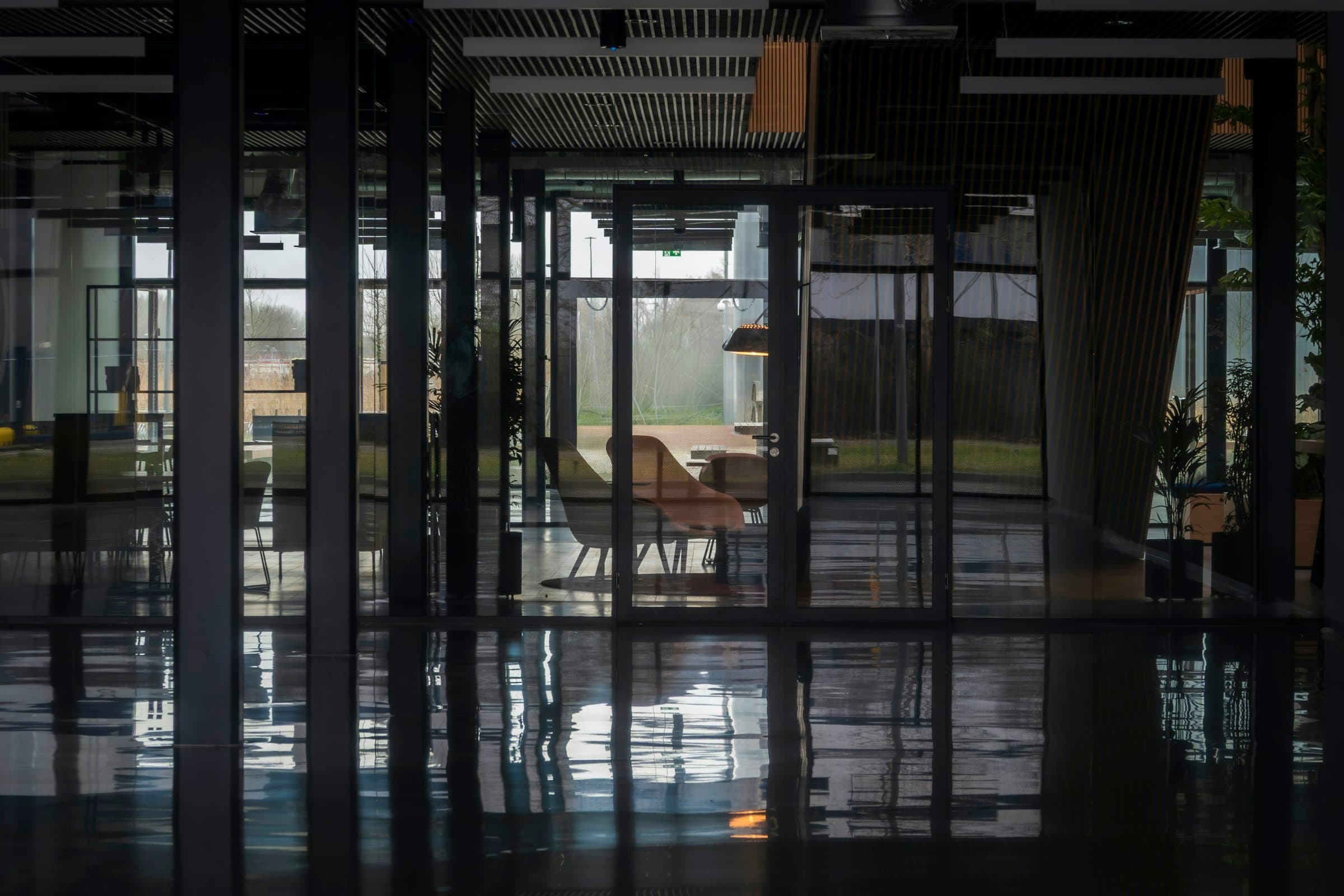
Your building opens clean. Nobody saw when.
We clean hotels, clinics, offices, shops and residential buildings across the Algarve — inside the window when the building is not working. Whoever opens the door in the morning finds the job done, not the team doing it.
The window, by type of building
11:00–15:00 · 4h on site · Between checkout and check-in
The service
What gets done, and how often.
A cleaning contract is worth whatever is written in it. This is the base plan — the site visit tunes the frequencies to the building, and whatever is tuned goes into the proposal before anyone signs.
| Area | Daily | Weekly | Monthly | Stock-led | One-off |
|---|---|---|---|---|---|
| Common areasEntrances, corridors, lifts and stairs. It is what a visitor sees in the first ten seconds, and what settles their impression of the whole building. | — | — | — | — | |
| WashroomsFull disinfection, consumables restocked and drainage checked. This is where a lapse is noticed the same day, and talked about. | — | — | — | — | |
| Glass and shopfrontsInterior glass within reach, shopfronts and doors. No water marks, which is the flaw that shows the moment the sun hits. | — | — | — | — | |
| FloorsVacuumed and washed according to the material — stone, vinyl, carpet. Each one gets the product and the machine that will not ruin it over time. | — | — | — | ||
| WasteCollected, separated and placed in the building's route. In clinics, the dedicated route for clinical waste. | — | — | — | — | |
| ConsumablesPaper, soap and bags, tracked by us. The Friday phone call saying it has run out stops happening. | — | — | — | — | |
| Post-construction cleaningPlaster dust, paint residue and factory labels. Done once, at the end of the works, and it is what separates keys handed over from a space ready to use. | — | — | — | — | |
| Event cleaningBefore, so the doors open on a room in order, and after, to hand it back as it was. Booked for the date and gone with it. | — | — | — | — |
Price
What moves the number, before anyone says a euro.
We don't quote over the phone, and the reason isn't commercial: a cleaning price given without seeing the building gets corrected on the first invoice. These are the five things the site visit measures, and the weight each one carries.
How the figure is reached
(areafrequency)accessflooringwindow
What multiplies
Floor area
The base of everything, measured in usable square metres — the ones the team walks. Gross floor area includes walls and risers, which nobody cleans, which is why a contract built on it always comes out wrong.
Usable m², per floor
Frequency
How many times a week somebody goes in. It is the factor that moves the monthly figure most, and the first one to revisit when a budget tightens — before cutting areas, you cut one visit a week.
Visits per week, per area
What adds on
Access
With no lift, materials go up on someone’s back and waste comes down the same way. A building with a loading bay and one without a lift have the same floor and nothing like the same labour cost.
Floors, lift, loading bay
Flooring
Stone, vinyl and carpet take neither the same machine nor the same product. Polished stone needs periodic treatment; carpet needs extraction. Treating all three alike ruins two of them.
Material and area of each type
The window
Working after ten at night or before six in the morning costs the people doing it more, and that belongs in the price rather than out of their wages. A wide window is cheaper than a two-hour one.
Hours and days access is possible
None of this is a rate card. It is what the visit measures in order to write a proposal that holds for twelve months — and what stops the conversation starting at a number nobody can honour.
Access
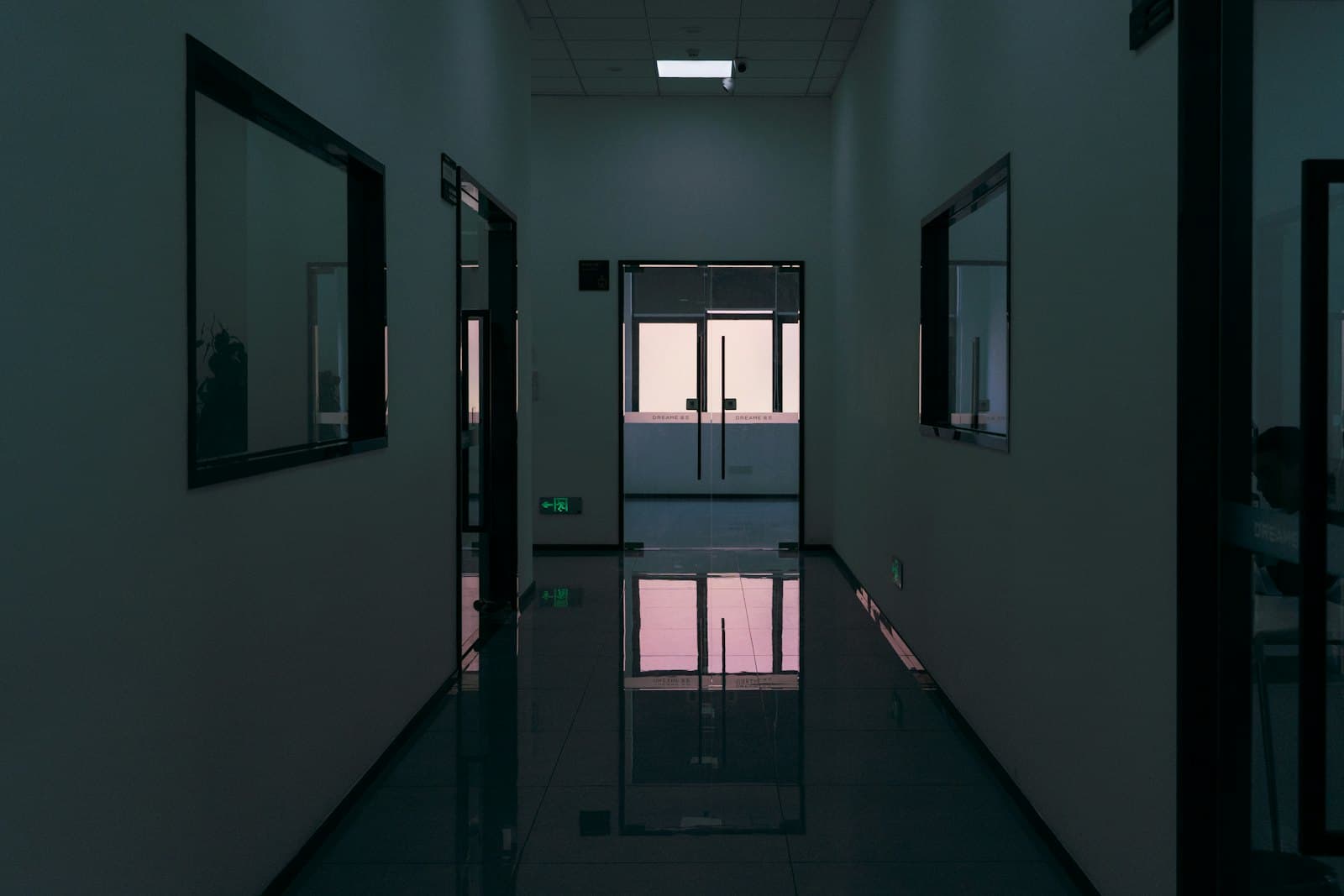
Somebody enters your building when nobody is there.
It is the uncomfortable half of the promise this page makes in every section, and almost no cleaning website writes it down. Working outside hours means keys, alarm codes and a building in the dark — and the question does not go away by going unanswered: it gets asked on the phone, at the end, with the contract all but signed.
The same people
A named team per building, not whoever is free that night. The person who comes in is known to the people who work there by day.
Keys and codes on a register
Who took them, when they came back, signed for. A set of keys with no register is a set of keys lost the day somebody leaves the company.
Every entry is written down
Time in and time out, on the same service record. If anything ever needs clearing up, there is a sheet to check instead of recollections.
Team identification and background checks for anyone entering outside hours.to confirm
Sectors
Every building has its difficult hour.
It is not the same service under another name. What changes between a hotel and a clinic is the hour you can go in, what cannot be left undone, and what happens if it is.
15:00
Deadline
Hotels
The window is the gap between the last checkout and the first arrival. There is no leaving it for tomorrow: at 15:00 the room is ready or the guest waits at reception.
16:00
Deadline
Short-term rentals
Guests leave at ten or eleven and the next ones arrive at four, and in between there is a whole home to turn around: kitchen, linen and bathroom. There is no front desk to keep anyone waiting.
22:30
Deadline
Clinics
Contact surfaces, waiting rooms and waste on its own route. Cleaning starts after the last appointment and has to be finished before the first one next morning.
08:30
Deadline
Offices
Nobody wants a vacuum cleaner next to a call. The team arrives before the first person does and leaves before nine, so whoever opens the door finds the work done.
00:30
Deadline
Retail
Shopfronts, high-traffic floors and fitting rooms, with the door shut. What is cleaned at closing time is dry and mark-free when the shop opens.
09:00
Deadline
Building management
Entrances, lifts, stairs and car park, on fixed hours the manager can post on the wall. It is what heads off half the complaints at the next owners' meeting.
Your building is none of these? Warehouses, schools, gyms and industrial spaces are planned the same way: a visit and a window.
Book a site visit
Continuity
What happens when someone doesn't show up.
It is the question that decides a cleaning contract, and the one that rarely appears written on a website. A trusted individual who falls ill leaves the building uncleaned; an organised team does not.
Same-day cover
An absence is reported and covered within the same window. The client does not find out by finding the building uncleaned.
A supervisor, not a team leader
Control visits with a checklist, unannounced to the team. It is how a problem is found before the client finds it.
A record of every service
What was done, when and by whom, in writing. In a complaint, it stops being one person's word against another's.
Public liability policy and workplace accident cover for the teams.to confirm
Getting started
A visit first, then a real price.
We don't quote over the phone. A cleaning price given without seeing the building is a number that gets corrected on the first invoice, and that is how these relationships start badly.
- 01
Site visit
We measure the areas, look at the materials and agree the window when the team can go in. Half an hour, at whatever time suits.
Within 48 hours of contact
- 02
Written proposal
A work plan with areas, frequencies and hours, and the monthly price. What is not written is not contracted — on either side.
Up to 3 working days
- 03
Supervised start
The supervisor is there every day of the first week, to settle what the visit could not foresee.
First week